




Where to start. How to start. How to avoid the traps.
Jargon free for beginners. Deep dives for the money nerds.
If you watched the video and know this is for you.
Bi-Weekly Money Deepdives.
Join over 10,000 South African investors receiving actionable insights directly to their inbox.
THE 100-YEAR EMBARRASSMENT
“There are companies that have stood in South Africa for decades, yet people still don’t know where to invest. It’s embarrassing that that’s even a question, so why isn’t yours the name South Africans are proud to vouch for?”
THE CALL I’LL NEVER FORGET
“Mid-pandemic, a client’s portfolio was down 20% and she was terrified. I snapped instead of reassuring her and she put the phone down and never really came back….”
Direct masterclass access designed to guide you step-by-step into systemic financial independence.
Using a TFSA For Your Wedding
This module explains how using four years of contributions for your TFSA as a savings account robs you of R22.5M.
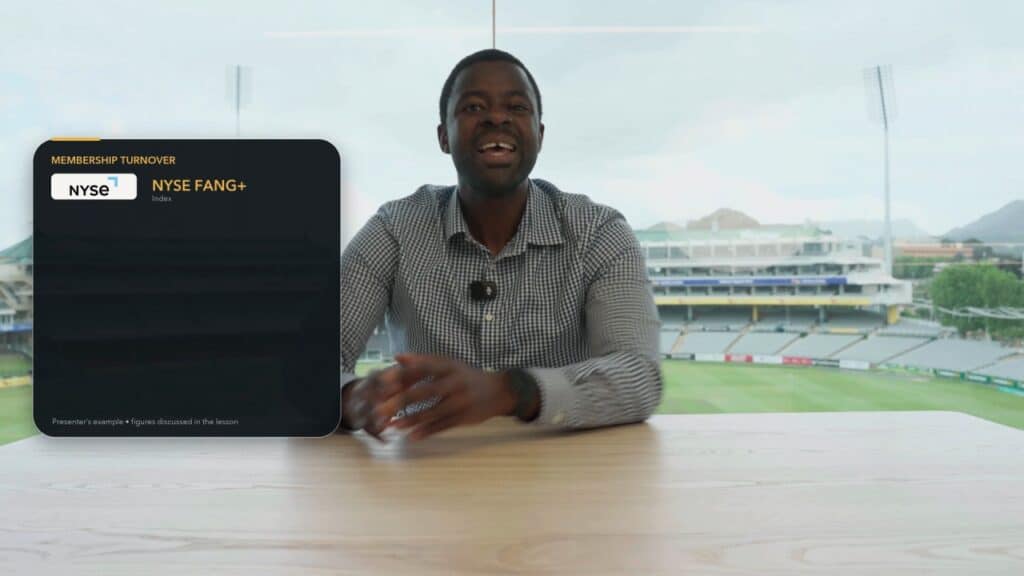
The Big Four US Funds Compared
S&P500, Nasdaq-100, S&P500 Infotech, and FAANG+ compared since 2014. Same $1,000, wildly different results.
Best Funds in SA. Active vs Passive
Active costs 2%, passive costs 0.12%. We compare SA’s leading funds and let the numbers answer.
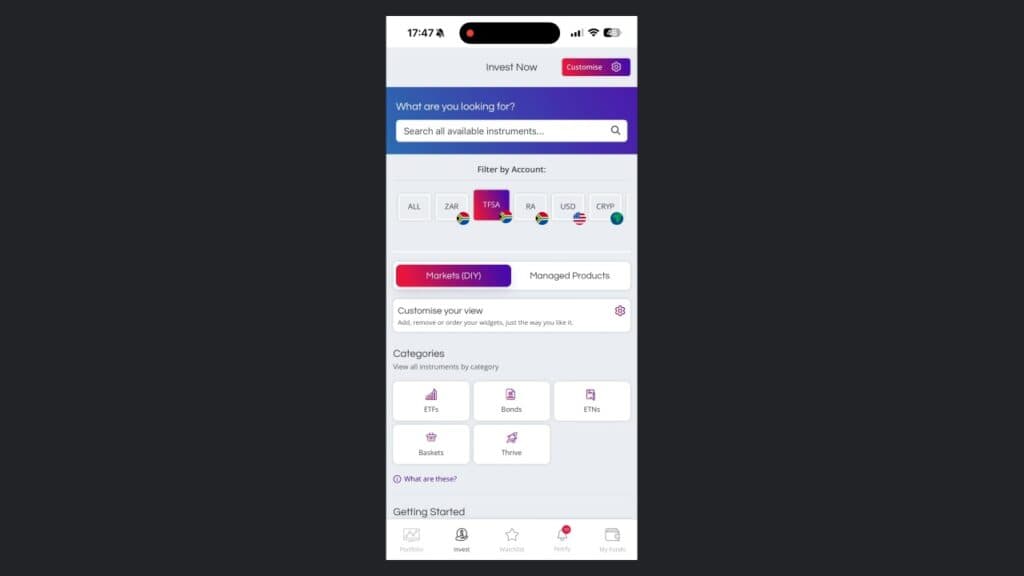
Set Up Your TFSA: Step-By-Step
A screen-recorded walkthrough of exactly where to click, and how SA’s top platforms compare.
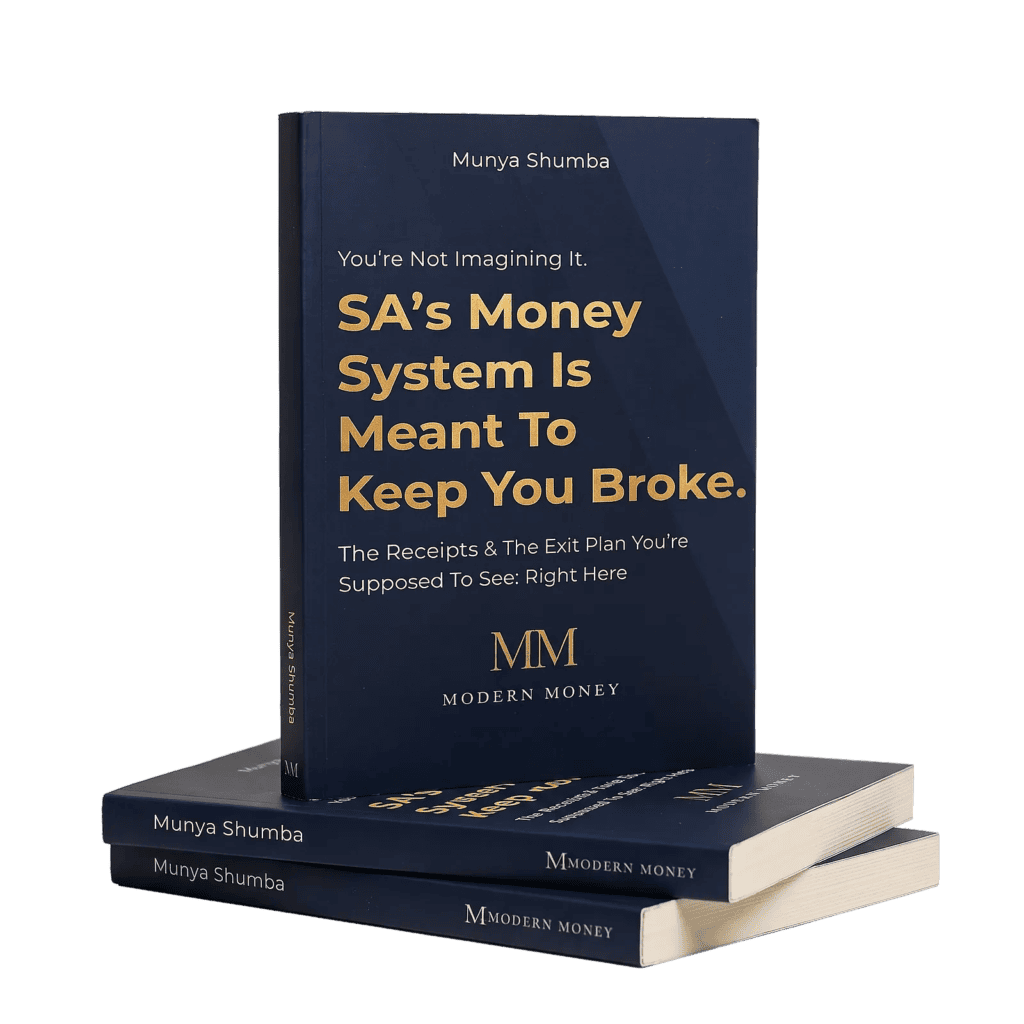
An extract from the book
Fast forward to when I started to find success on Instagram, one lady went to extraordinary lengths to contact me. She DM’d both my business and personal IG pages, my LinkedIn, and somehow found my personal and work emails. She rinsed and repeated all avenues until she finally got my attention. I eventually responded and said, “I’m sorry, but I’m not taking on new clients, and I can’t help you.” She replied, “I understand, but I don’t need much help. All I want from you, Munya, is to set up my finances correctly from the jump. I need an RA, a tax-free account, and the best place to park cash to buy a house in five years. Here’s my budget. You don’t need to call me ever again, but I want to know that if you did it, then it’s right. I’ve been too scared to start all these years because I don’t want to wake up 20 years from now and be told my money was in the wrong place. Please.”
Therein lies the issue. Here’s a lady incredibly disciplined, has saved and paid for her wedding herself, and when we met, had spreadsheets tracking everything she earns and where every rand goes each month. If that’s not financial literacy, then I don’t know what is. The missing link was, “Where do I invest, which is the best company, who do I trust, and how do I do it?”
And isn’t that a problem?
Is it just me, or is it strange that there are financial services companies that have stood in South Africa for 50, 60, 100 years, yet people still don’t know where the best place is to invest?! It’s embarrassing that that’s even a question. What have they been doing all this time? Why isn’t your company the obvious name that rolls off people’s tongue when someone says, “I need an RA,” or, “I need a TFSA.” Why isn’t your business the first name South Africans are unanimously proud to vouch for? The lack of answers to those questions is revealing in itself!
When I walk out of meetings like the one I had with this lady, the Pofadder mechanic, or even high-profile CEOs, it’s incredible that nobody knows what’s going on with financial services products in this country. I knew there had to be a way to hand people these keys to the kingdom where they could make their own money moves with confidence.
As I drove through Bloemfontein and past the Karoo, I thought, “Nearly every industry has found a way to scale, so why not financial education?”
After many years watching the same movie on repeat, I decided to try and make a change, even if the how wasn’t immediately clear. Worst case, if it didn’t work, I’d go back to Joburg and plug back into my pod. The real travesty would have been suppressing the courage to try, and compared to what other dreamers had to face, this move was a layup in terms of risk.
Take one of the greatest South African entrepreneurs, Allan Gray. He was also 35 when he left the USA to move back to South Africa in 1973 to open his investment business in Cape Town. But he faced real challenges. He was a Harvard graduate who’d been working for Fidelity Management for eight years, which is one of the two largest mutual fund companies in the world. He was married with three young children, leaving a guaranteed sweet long-term pension to move to apartheid South Africa, which was exiled from the world, to start an investment management company. All because it was his DREAM. And what an important leap that proved for South Africa later, because Allan Gray was one of the pioneers in bringing investment fairness and real growth to SA consumers. But what I would give to know how he felt as he fastened that seatbelt in New York, avoiding any side eyes from his missus, clutching his seat with sweaty palms, on a plane headed for South Africa. Whether he doubted his decision to completely upend his family’s life and their idyllic future for a complete gamble. Now that, for me, is guts.
An extract from the book
I recall in December 2019, I sat down with a very young and successful client. She was single and had made her mind up she’d established her career and wanted to start a family. What she didn’t want was to find herself in a situation where she found someone and wasn’t ready financially. Neither did she want to depend on a man to provide her kids with the life she wanted them to have. So, we put a 10-year plan in place to invest R700,000 into a mix of the Nasdaq-100, the JSE Top 40, along with R10,000 ongoing each month. This fund was going to pay for her kid’s school fees from grade one at a school like St Mary’s or St John’s. But just two months later, the pandemic happened. We weren’t in any lockdowns yet, but the market had already started trending downwards. Tech stocks dipped sharply from January 2020 until they bottomed in April 2020 during level five lockdown. We spoke every two weeks for those four months because she was nervous. She’d just started this new journey, excited about the future and how it’s going to set herself and future children up, and immediately she’s going backwards. Each call was the same, and I had to constantly reassure her, but nothing I said was working. I got an extremely nervous phone call late one night, soon after watching a family meeting during Level 5 lockdown, and she said, “Munya, I think we need to change strategies, my money isn’t safe and I’m worried I’m going to lose everything. Please explain what’s going on??” Now, granted, her and I had had this conversation multiple times since she’d started, and my talking points hadn’t changed. She was pressing me to change to safer, less volatile investments, but I wasn’t going to let it happen until she’d recovered, because it would have been a huge mistake. Although she wasn’t down much, maybe about 20%, if she switched to a money market portfolio or a stable, less volatile investment, it would take three years to recover and get back to even. Additionally, from an inflationary standpoint, it would take even longer, because R700K in three years’ time would have needed to be worth R860,000 to be where she originally was prior to investing. I needed to convince her the pain of holding on for now was far less than tomorrow’s regret if she were to let go and there was a recovery. The problem, as we all sat at home, was there was a constant 24/7 apocalypse on every news network. When she called again this time and went through the same concerns, I wasn’t as calm and measured as I should have been, and I’ll be the first person to admit my response to her wasn’t appropriate. I snapped back at her and said, “Listen, I hear you, but in case you haven’t realised, there’s a pandemic going on. What do you think is gonna happen to your portfolio?”
There was a long pause and silence, with no response from her, and I could tell she was hurt. She simply put the phone down on me. I knew in that moment I’d crossed the line, and I’d failed to show her the safety she was looking for in a moment of intense fear and vulnerability. I immediately tried calling her back, but she didn’t take any of my calls, and I knew I’d gone too far.
I sent a long voice note apologising, which she left on read and only responded two days later saying, “When I get back to zero, please withdraw all my money or find me a new broker.”
Listen to an extract